




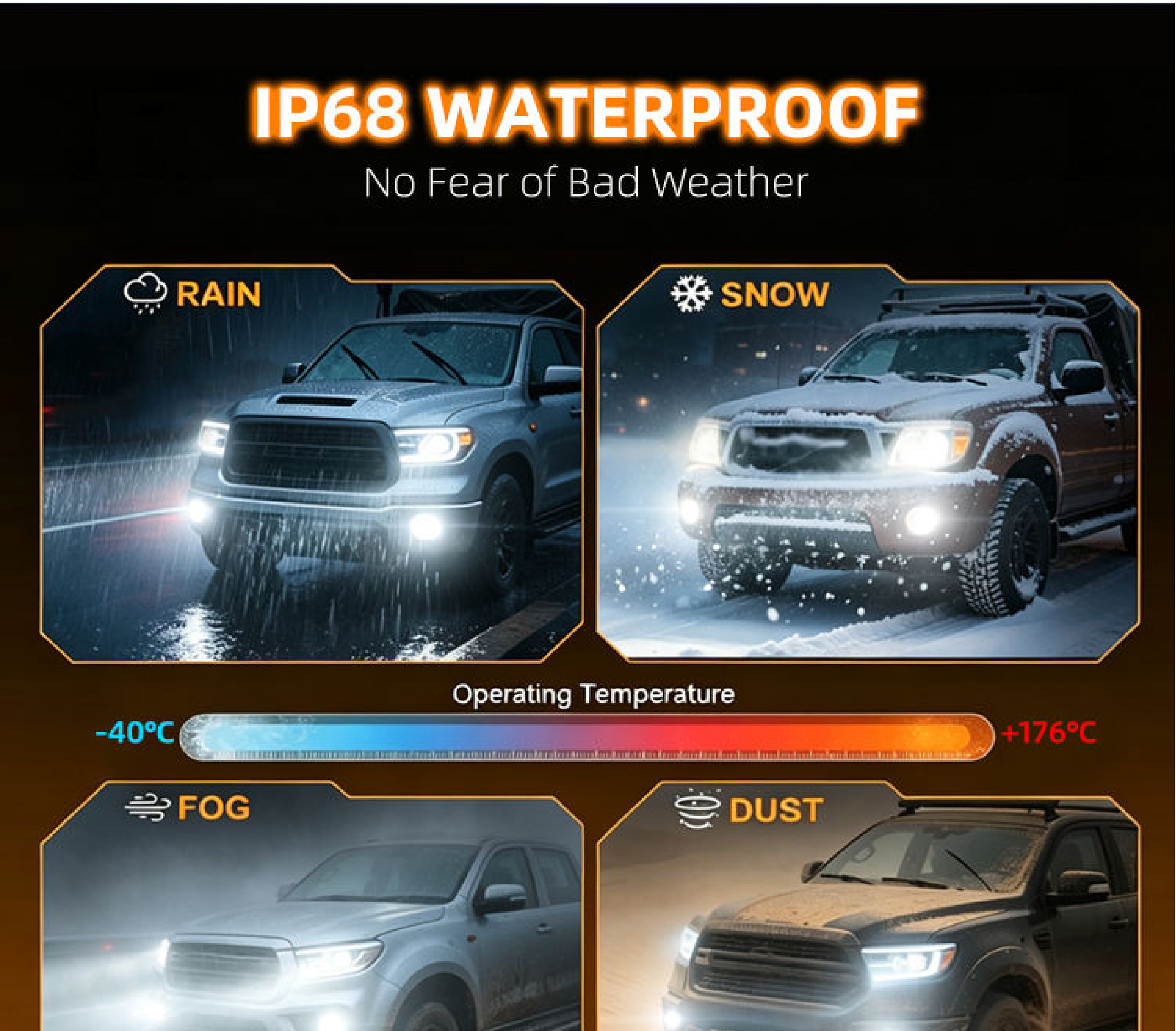


IP67 means a lamp is dust-tight and can survive immersion in 1 metre of water for 30 minutes; IP68 means dust-tight and immersion beyond 1 metre, with the exact depth and time set by the manufacturer. For car fog lamps, IP67 is enough for rain, splashes and car washes, while IP68 adds margin for deeper water. Neither rating means permanently waterproof — seals age, and a damaged housing fails at any rating.
Reading the IP code
The IP code has two digits. The first is dust protection, the second is water protection.
| Digit | First digit (dust) | Second digit (water) |
|---|---|---|
| 6 | Dust-tight — no dust gets in | — |
| 7 | — | Immersion up to 1 m for 30 minutes |
| 8 | — | Immersion beyond 1 m, depth and time set by the manufacturer |
Both IP67 and IP68 start with 6, so both are fully dust-tight. The difference is only in the water test.
What the tests actually involve
- IP67: the lamp is submerged in 1 metre of still water for 30 minutes and must keep working with no harmful water entry.
- IP68: the lamp is submerged deeper than 1 metre, for longer, under conditions the manufacturer specifies. Because the manufacturer defines the test, two IP68 lamps are not automatically equal — ask for the test depth and duration.
- What neither test covers: high-pressure jets, steam, hot water, or years of vibration and temperature cycling. A car wash jet is a different kind of stress from still-water immersion.
What it means for a fog lamp
Fog lamps sit low, so they meet the worst conditions on the car: standing water, spray from other vehicles, snow slush and pressure washers. In practice:
- IP67 covers rain, splashes, puddles and normal washing.
- IP68 is worth paying for if the car regularly drives through deep standing water or floods.
- Below IP67 is a warning sign for a lamp mounted this low on the vehicle.
The rating is not forever
Seals are rubber and plastic. Heat, cold, UV and vibration age them, and a knock can crack a lens or distort a housing. A lamp that was IP67 when new can leak after years of use or after a minor impact. Inspect the lens and housing seal when buying, and replace a lamp that keeps fogging up inside — resealing rarely restores the original rating.
FAQ
Is IP68 always better than IP67?
For water resistance, yes — but only if the manufacturer's IP68 test conditions are stated. An IP68 rating with no depth or duration given tells you less than a clearly specified IP67 rating.
Does IP67 protect against car wash jets?
IP67 tests still-water immersion, not jets. A good housing handles both, but the rating alone does not prove jet resistance; that is covered by IPX5/IPX6-style jet tests, which are separate ratings.
My fog lamp is IP67 but has condensation inside. Why?
The seal has likely failed or the lens is cracked. Condensation means moist air is getting in — the rating describes the lamp as manufactured, not as damaged.