






LED headlights usually dim or fail early because of heat, not because the LED itself wore out. Poor cooling, unstable voltage, water ingress, a failing driver or a bad connection are the common causes — and most of them are fixable. If one bulb dims while the other stays bright, the problem is almost always in that bulb's cooling, wiring or driver, not in the car's electrical system.
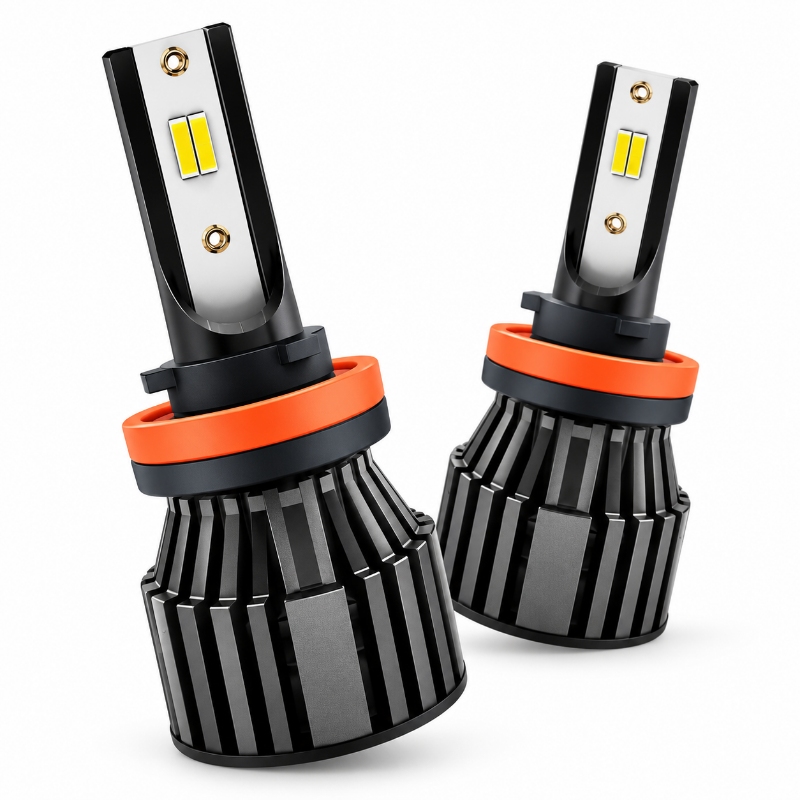
1. Heat: the number one killer
LEDs lose brightness as they get hotter, and sustained high temperature shortens their life. The usual causes are a blocked cooling fan, a heat sink packed with dirt, or a bulb fitted in a sealed housing with no airflow. Fix: clean the fan and heat sink, make sure the fan spins freely, and check that nothing blocks airflow behind the headlight. A bulb that dims after 20–30 minutes of driving and recovers when cold is almost certainly overheating.
2. Unstable voltage
Voltage spikes and drops stress the driver electronics. A weak alternator, a dying battery or a loose ground connection can all cause dimming. Fix: check battery voltage and ground connections, and have the charging system tested if both headlights are affected.
3. Water ingress
A failed seal lets moisture into the housing. Water on the driver or connector causes corrosion, flicker and eventual failure; condensation on the lens also scatters light and makes the beam look dim. Fix: dry the housing, find the leak (usually a seal, a cover or the vent), and replace the damaged seal. If the driver has corroded, replace it.
4. A failing driver
The driver converts the car's 12V or 24V supply to the current the LED needs. A cheap or overheated driver degrades over time and delivers less current, so the bulb dims. Fix: replace the driver. If the driver is built into the bulb, replace the bulb.
5. A bad connection
A loose or corroded connector causes voltage drop at the bulb. The bulb dims, flickers, or cuts out on bumpy roads. Fix: clean the contacts, check for corrosion or melted plastic, and reseat or replace the connector.
6. A low-quality bulb
Some bulbs are simply built to a low standard: thin heat sinks, no thermal protection, and drivers that run hot. They can look bright at first and fade within months. Fix: there is no repair for this one — replace with a bulb from a supplier that publishes test data and stands behind the product.
When to replace instead of repair
- The LED chip itself is discoloured or cracked.
- The driver is sealed inside the bulb and has failed.
- The housing seal is damaged and the unit keeps taking in water.
- The bulb has dimmed well below its original brightness even after cleaning and checking connections.
FAQ
Why does one headlight dim but not the other?
Because the fault is in that side's bulb, driver, cooling or wiring. Swap the bulbs left to right: if the dimming follows the bulb, the bulb is the problem; if it stays on the same side, the car's wiring or housing is the problem.
Can a dim LED headlight be repaired?
Sometimes — cleaning, a new driver or a new connector can fix it. If the LED chip itself has degraded, replacement is the only option.
How can I tell if heat is the problem?
If the light is bright when cold and dims after 20–30 minutes, then recovers after cooling down, heat is the cause. Check the fan and airflow first.