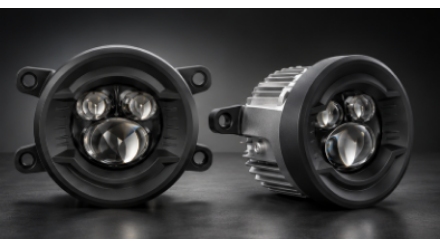





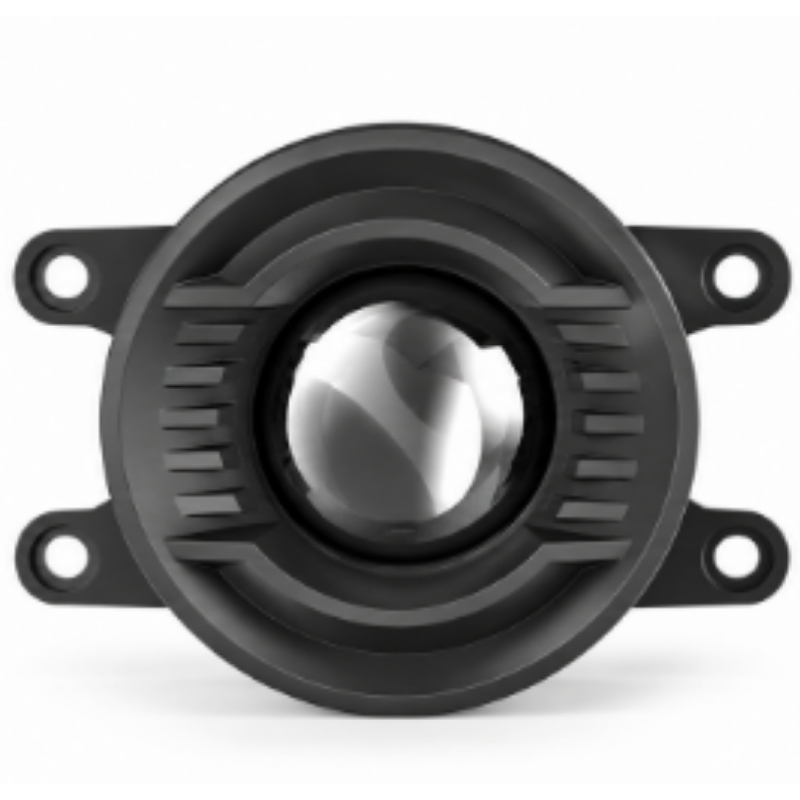


Waterproof fog lamps survive rain and car washes because of three things working together: a sealed housing with gaskets and adhesive, an IP rating that proves the seal was tested, and a breather valve that lets pressure equalise without letting water in. Heat from the LEDs also helps — it drives moisture out after the lamp gets wet. A lamp fails when any one of these is missing or damaged, not because of the rain itself.
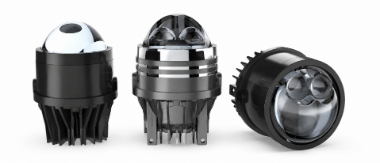
How the seal works
A fog lamp housing is sealed at every joint: the lens is bonded to the housing with adhesive, the back cover has a rubber gasket, and the wiring enters through a sealed grommet. Inside, the LED board is often coated or potted to protect it from any moisture that does get in. The seal is not one part — it is a system, and a failure at any joint lets water in.
IP ratings: what they actually prove
An IP rating has two digits: the first is dust protection, the second is water protection. For fog lamps, the common ratings are:
- IP65: protected against water jets from any direction — rain and car washes.
- IP67: protected against immersion in shallow water for 30 minutes — deep puddles and flooding.
- IP68: protected against deeper, longer immersion — the test conditions are set by the manufacturer.
An IP rating is a lab test on a new lamp. It does not mean the lamp stays waterproof forever: gaskets age, adhesive cracks, and a hard knock can break a seal. Treat the rating as a starting point, not a guarantee for life.
The breather valve: small part, big job
A sealed lamp heats up when the LEDs run and cools down when they switch off. Without a way to equalise pressure, the cooling lamp would suck moist air in through the seals. A breather valve — a small membrane that lets air through but blocks water — solves this. It is one of the first things to check if a lamp keeps fogging up: a blocked or missing valve causes condensation even when the seals are fine.
Condensation vs water ingress
- Light condensation — a thin mist on the inside of the lens that clears after the lamp runs for 20–30 minutes — is normal in many lamps and usually harmless.
- Water ingress — droplets, pooling water, or condensation that never clears — means a seal has failed. Dry the lamp, find the leak, and replace the failed gasket or the lamp.
Car washes and pressure washers
A pressure washer held close to a fog lamp can force water past a seal that rain never would. Keep the nozzle at least 30 cm away, avoid spraying directly at the lens edge and the wiring entry, and never aim a jet at the breather valve. After washing, run the lamps for a few minutes — the heat drives out any moisture that got in.
FAQ
Is IP68 always better than IP67 for fog lamps?
Not necessarily. Both handle rain and car washes easily. IP68 matters only if the lamp will be submerged — for example, on an off-road vehicle that crosses water. For most cars, a well-sealed IP67 lamp is enough.
My fog lamp fogs up after rain. Is it broken?
If the mist clears after the lamp runs for 20–30 minutes, it is usually normal condensation. If it never clears, or you can see droplets or pooling water, the seal has failed.
Can I reseal a fog lamp myself?
You can replace a back-cover gasket, but resealing a bonded lens needs the right adhesive and a clean, dry workspace. If the lens seal has failed, replacing the lamp is usually the better option.